
Better edge support
Kerb edging helps protect vulnerable margins where driveways often start to break down.
Cleaner surface transitions
We create a clear link between the driveway and grass, paths or planted borders.
Useful control of runoff
Edging can help guide water movement and keep loose gravel where it belongs.
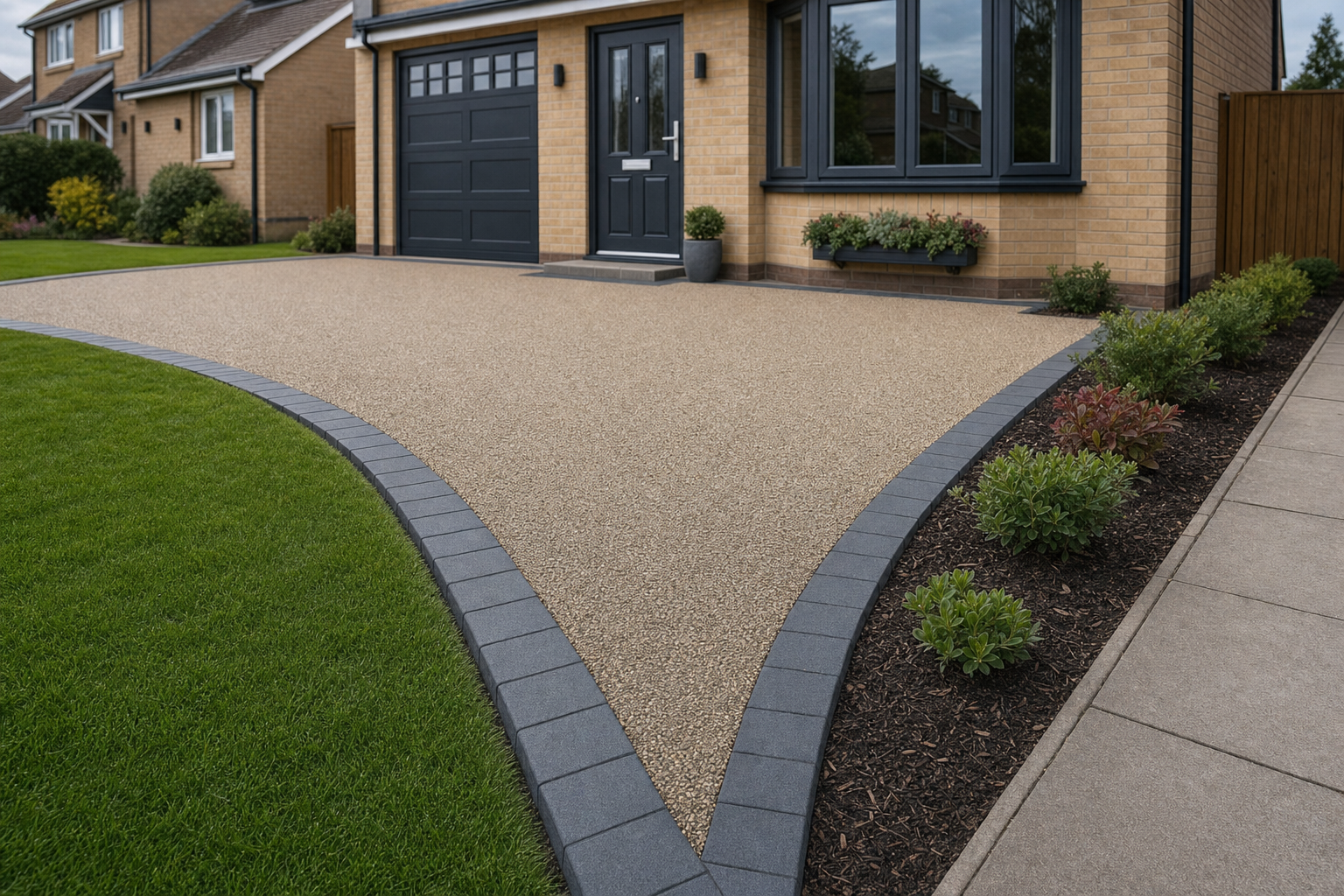
Edging gives a driveway shape, support and a tidier finish
Kerb edging does more than frame the driveway for looks. It helps define the boundary, supports vulnerable surface edges and creates a clean transition into lawns, paths or planted areas that might otherwise crumble into the parking space. With Next Level Paving, driveway edging is treated as a practical part of the build, especially on surfaces where loose material, weak margins or messy borders keep causing trouble. In Colchester, edging can also help retain gravel and guide the direction of surface runoff, which makes it useful for both appearance and day to day function. The right line and profile can make a driveway look more deliberate while also protecting it from gradual spreading and wear at the sides.
The line, level and haunching decide how well it performs
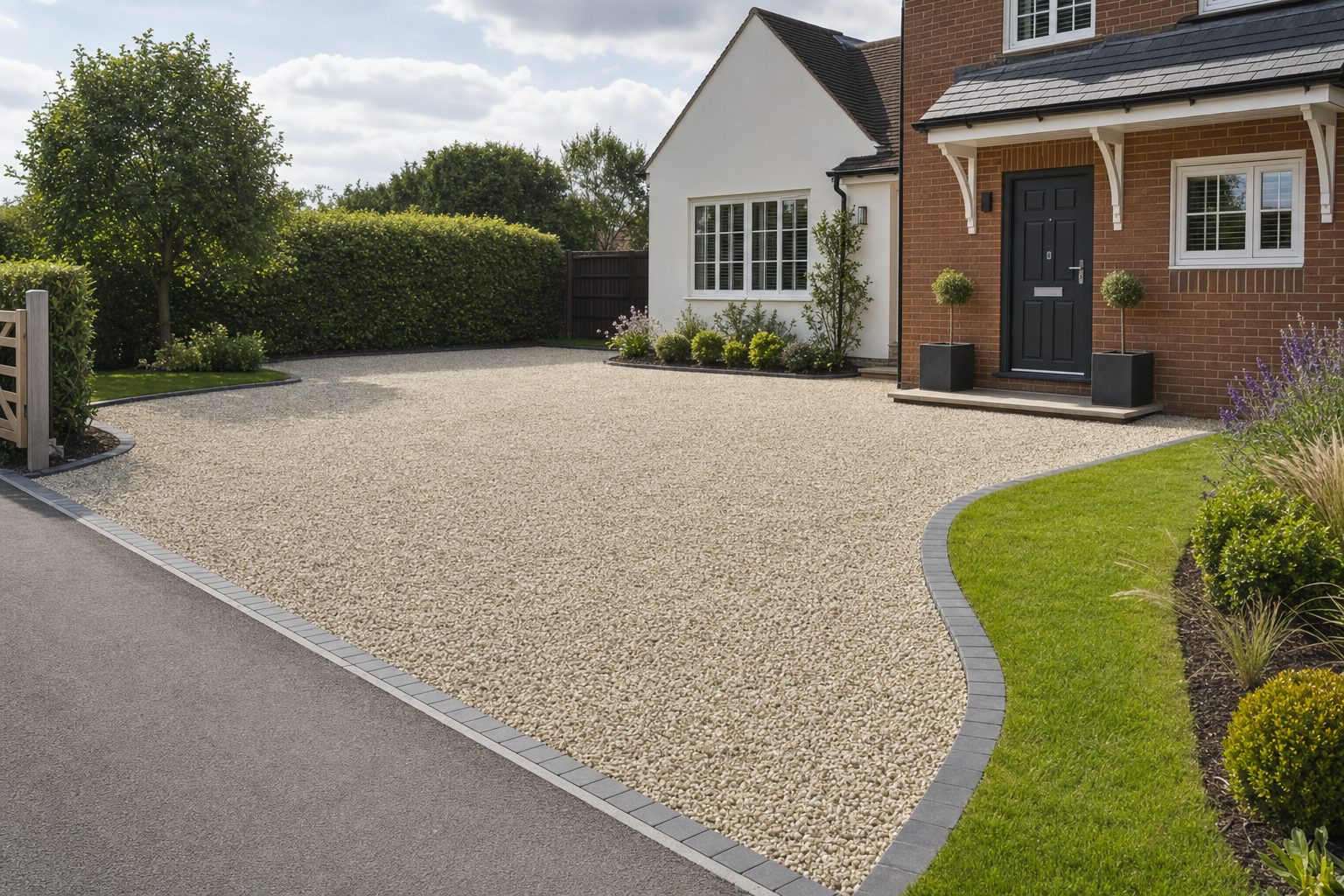
Good edging needs accurate setting out from the start. We plan straight or curved lines, raised or flush profiles and either contrasting or coordinating finishes to suit the entrance and the surrounding surfaces. Choose Next Level Paving when you want that detail handled carefully, because a wavy edge or poor bedding stands out every time you pull onto the drive. The main build stages include ground preparation, bedding, alignment and secure haunching, all of which help keep the edging stable over time. When it is done properly, the boundary does not just look sharper, it gives the driveway clearer structure and better support where the edges usually take the knocks.
Frequently asked questions
Why add kerb edging to a driveway?
Kerb edging defines the boundary of the driveway, supports the surface at the margins and creates a neater transition to paths, lawns or planted areas. On some driveways it also helps retain loose gravel and guide runoff, so it is practical as well as decorative.
What edging styles can we choose from?
We can plan straight or curved lines, raised or flush profiles and either contrasting or coordinating finishes depending on the driveway and entrance design. The right style depends on how visible you want the edge to be and what job it needs to do at the boundary.
What makes driveway edging stay stable over time?
Proper ground preparation, accurate setting out, solid bedding, careful alignment and secure haunching are the key stages. If those parts are rushed, the edging can move, dip or wander. When they are done properly, the boundary stays much firmer and looks cleaner for longer.